
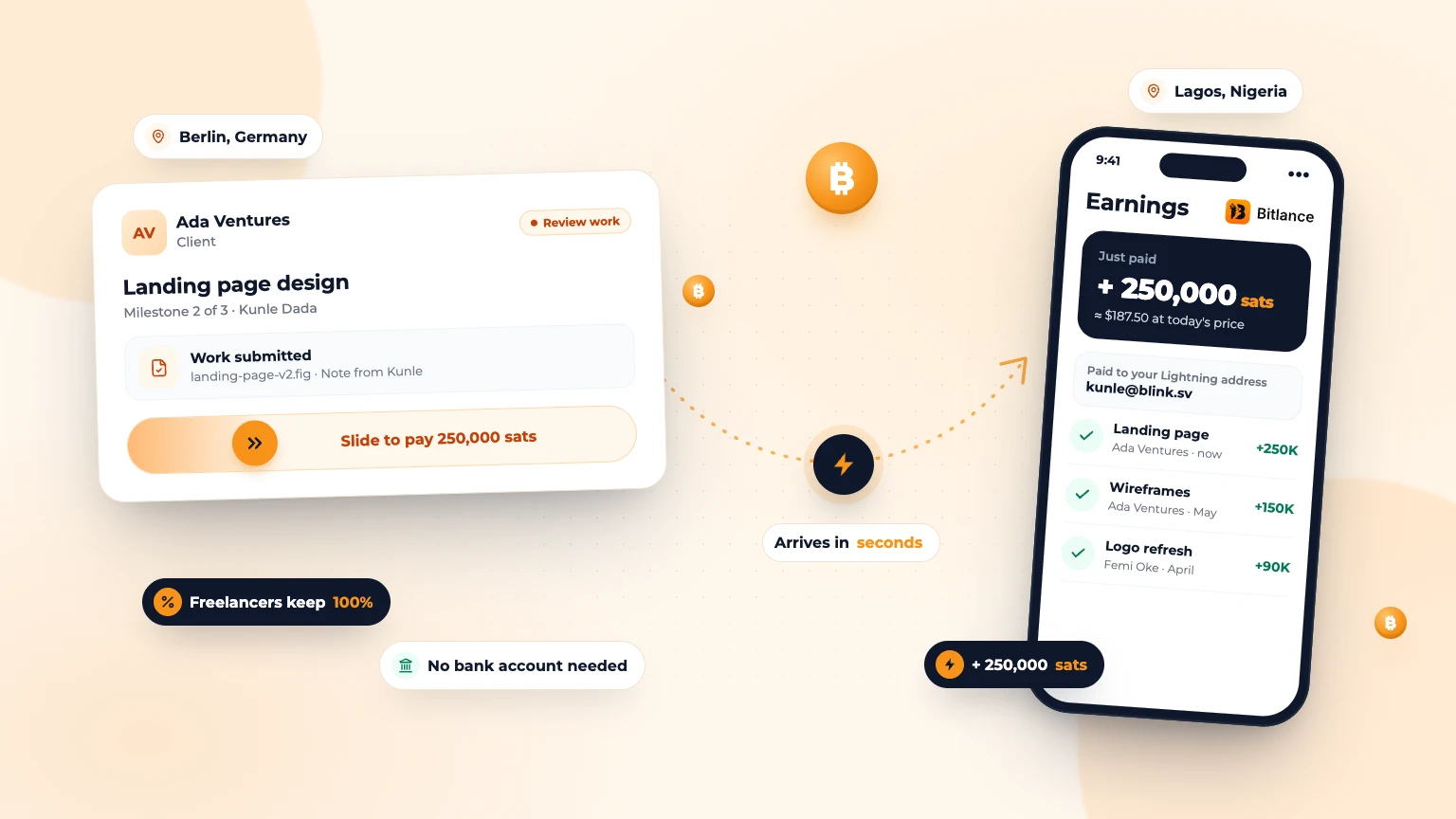
Nigeria has one of the largest freelance workforces in Africa. Designers, developers, writers and virtual assistants work for clients in the US, Europe and Asia every day. The hard part often isn't finding the work. It's getting paid.
Why international payments are hard
If you've freelanced from Nigeria, you've probably met at least one of these problems:
- Payment apps that don't fully work. Some popular payment services limit or block receiving money in Nigeria.
- Slow bank transfers. International wires can take days, and the money can be held for checks.
- High fees. Platform fees, transfer fees and currency conversion can together take a large share of what you earned.
- Exchange rate losses. By the time dollars reach you as naira, the rate you get may be far from the market rate.
How bitcoin changes this
Bitcoin is money that moves over the internet without a bank in the middle. The Lightning Network is a faster layer on top of bitcoin that makes small and medium payments arrive in seconds, usually for a tiny fee. A client in Berlin can pay you in Lagos as easily as sending a message.
All you need is a Lightning wallet on your phone. You don't need a bank account to receive the payment, and no one can freeze it on the way.
How it works on Bitlance
Bitlance is a freelance marketplace built around Lightning payments:
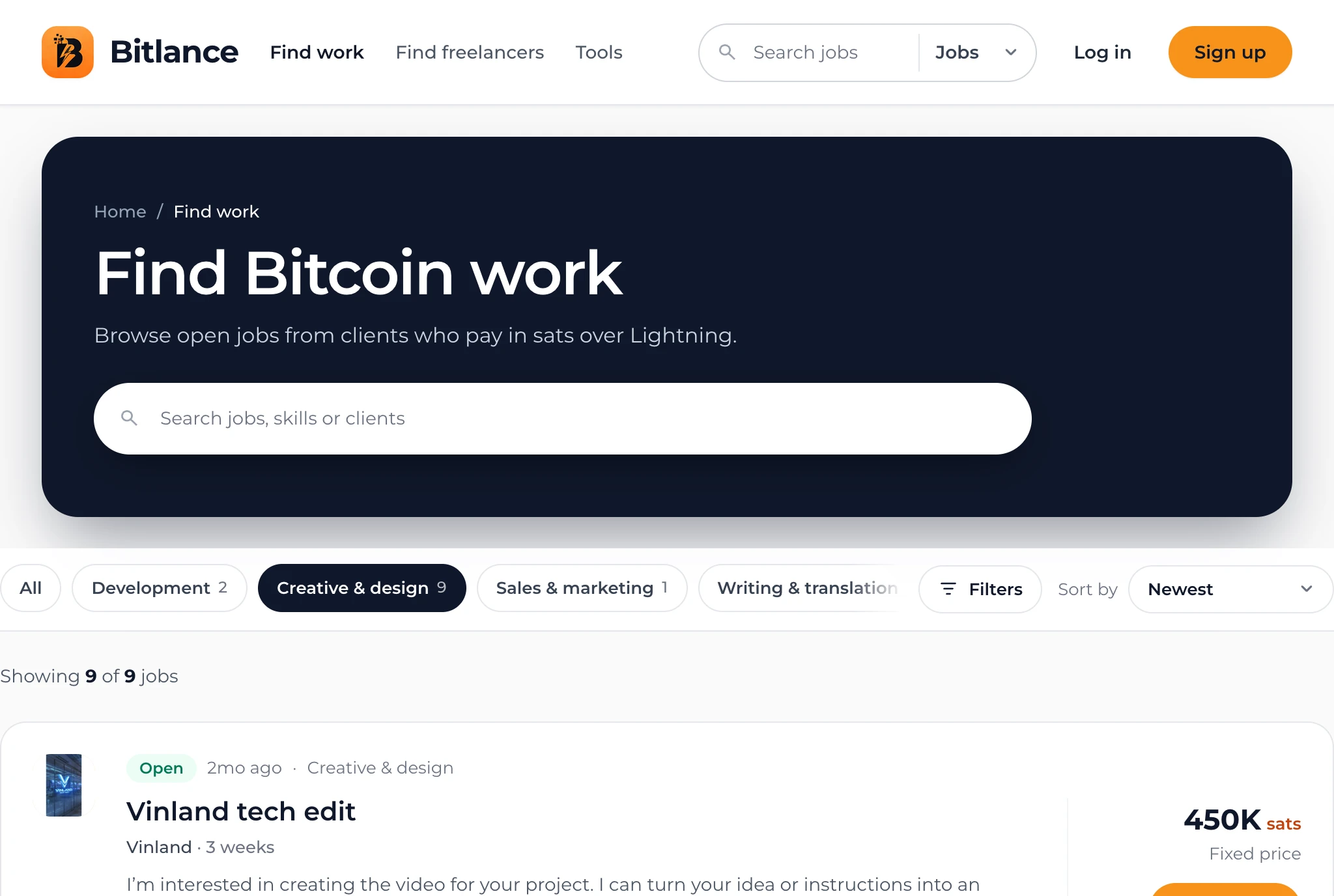
- You create a free profile and list your skills and rate in sats (small units of bitcoin). Bitlance shows the dollar value next to your rate.
- Clients from anywhere post jobs. You send proposals.
- When a client hires you, they fund a milestone before you start.
- When they approve your work, the sats go straight to your Lightning address.
Freelancers keep 100% of their earnings on Bitlance. Clients pay the platform fee.
Turning sats into naira
Once you've been paid, you can keep your sats or convert some of them to naira for everyday spending. People in Nigeria commonly do this through peer-to-peer marketplaces and local exchange services. A few rules keep you safe:
- Use well-known services with good reviews, and start with a small amount to test them.
- Never send bitcoin to a stranger first because they promise a better rate.
- Rules for digital assets in Nigeria have changed in recent years. Check the current rules and your tax obligations, or ask a professional.
Things to know before you start
- The price moves. Bitcoin's dollar value goes up and down. If you need a fixed amount of naira for bills, convert that part soon after you're paid.
- Protect your wallet. Write down your backup words on paper and never share them with anyone, including support staff. No real company will ask for them.
- Price fairly. Use the guide to pricing your work in sats to set a rate that makes sense in dollars and naira.
Get started
Read how to sign up on Bitlance as a freelancer, set up a Lightning wallet, and create your free account.
Frequently asked questions
Can I receive payments from foreign clients in Nigeria without a bank account?
Yes. With a Lightning wallet on your phone you can receive bitcoin from clients anywhere, with no bank in the middle. You can then keep it or convert some to naira.
Do freelancers pay fees on Bitlance?
No. Freelancers keep 100% of their earnings. Clients pay a 5% platform fee on funded milestones.

Written by
Bitlance team
Research and insights on Lightning Network payments, remote Bitcoin work, and freelancing.
Related articles
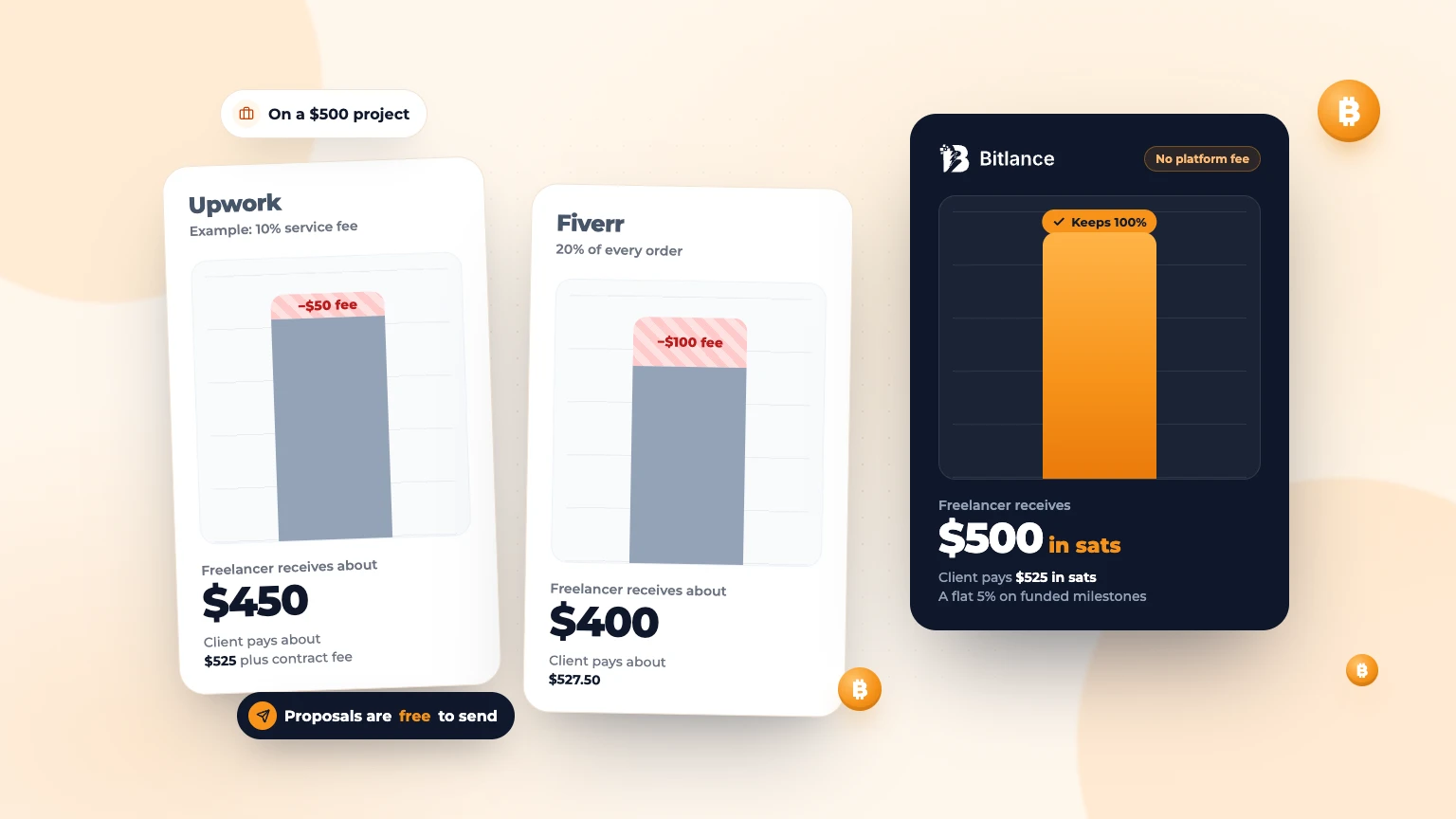
Upwork Alternative: Upwork vs Fiverr vs Bitlance Fees Compared
How much freelancers and clients pay on Upwork, Fiverr and Bitlance, and which platform suits which kind of work....
Nov 72 min read
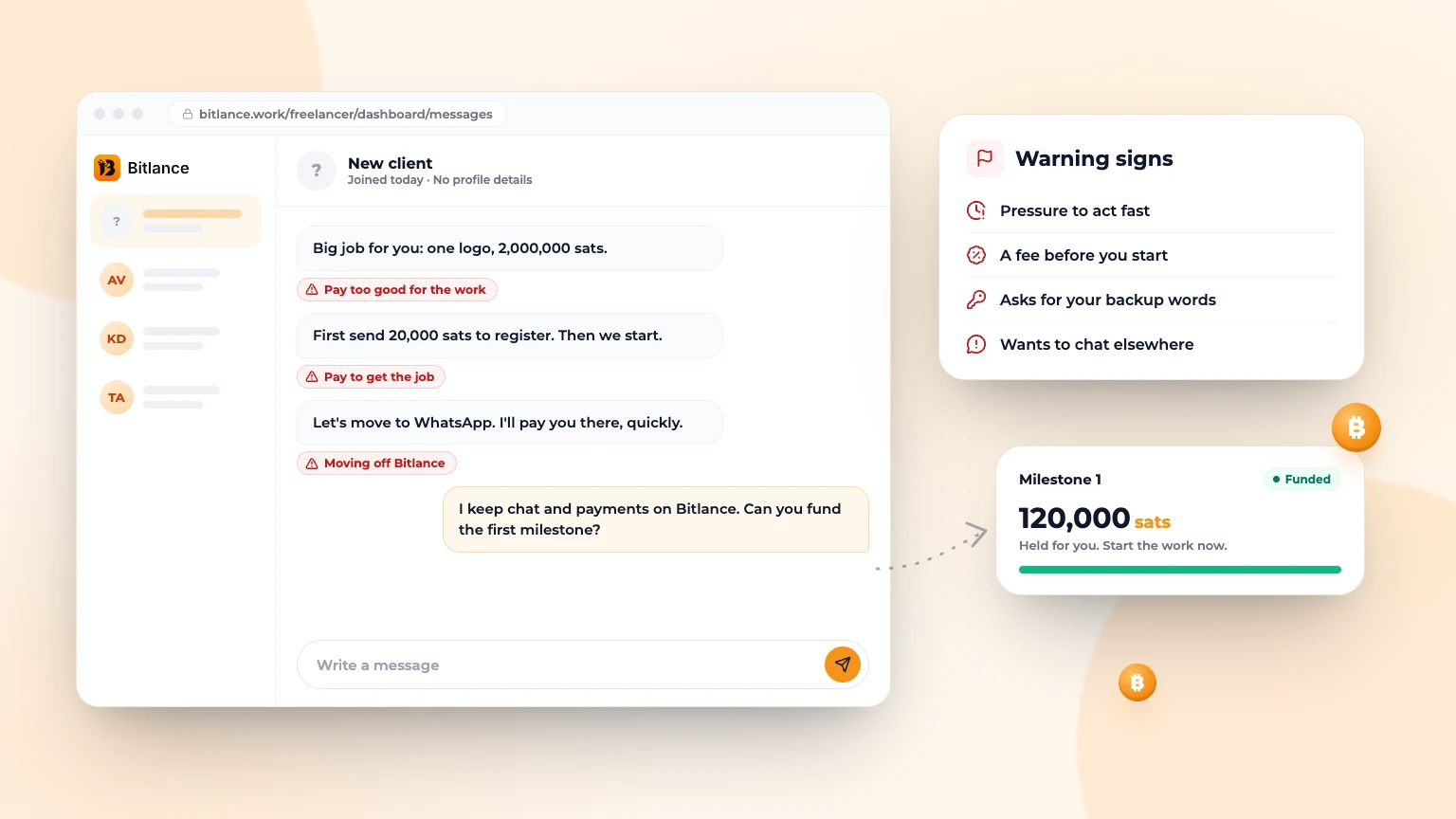
How to Avoid Freelance Scams: Warning Signs for Freelancers and Clients
The most common freelance scams, the warning signs to watch for, and simple habits that keep your money and work safe....
Nov 72 min read
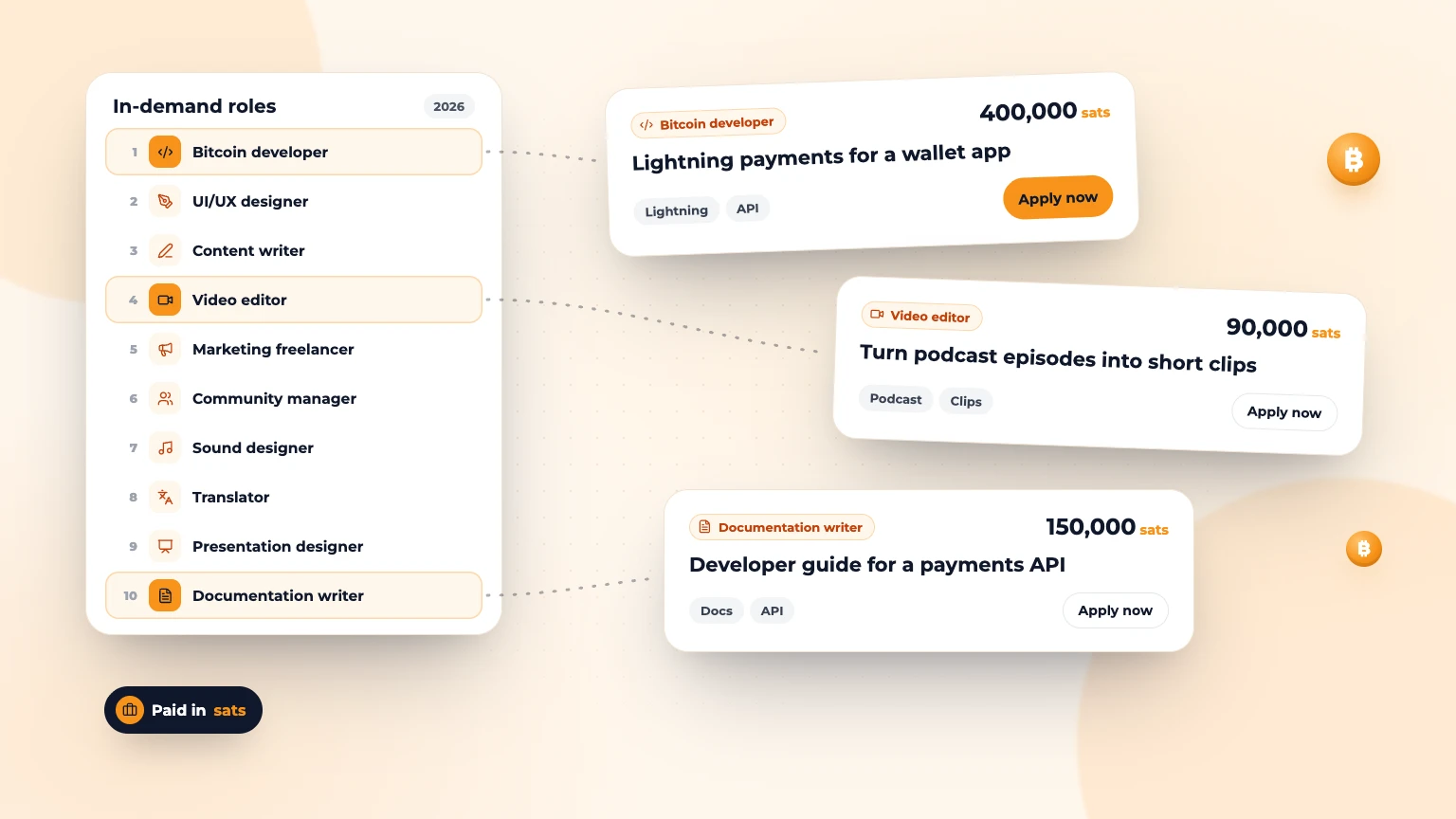
10 Best Bitcoin Freelance Jobs in 2026
A guide to the ten most in-demand Bitcoin freelance jobs in 2026, covering development, design, writing, and other roles Bitcoin startups are hiring for....
Aug 303 min read