
How to Get Paid in Bitcoin as a Freelancer
A practical guide to getting paid in Bitcoin as a freelancer, covering wallets, payment methods, and what to consider before accepting Bitcoin payments.
Getting paid in Bitcoin means receiving freelance income directly in Bitcoin rather than fiat currency, typically sent to a personal wallet after a project is completed. As more Bitcoin-native startups hire freelancers, understanding how Bitcoin payments actually work has become a practical necessity rather than a niche skill. This guide covers the basics: setting up a wallet, choosing a payment method, and what to consider before accepting Bitcoin as payment.
Set Up a Bitcoin Wallet
Before accepting any payment, freelancers need a wallet capable of receiving Bitcoin. Wallets fall into two broad categories: custodial wallets, where a third-party service holds the funds on your behalf, and self-custody wallets, where the freelancer holds their own private keys. Self-custody offers more control but requires more responsibility for security. Resources like bitcoin.org provide neutral, non-commercial guidance on choosing a wallet.
Understand On-Chain vs. Lightning Payments
Bitcoin payments can be sent on-chain, directly on the Bitcoin blockchain, or through the Lightning Network, a faster, lower-fee layer built for smaller, more frequent transactions. On-chain payments are generally better suited to larger, one-time project payments, while Lightning is often preferred for smaller or recurring payments. Freelancers should confirm which method a client intends to use before invoicing.
Agree on Pricing Before the Work Begins
Because Bitcoin's price can fluctuate, freelancers and clients should agree upfront on how the payment amount is determined — for example, pricing the project in a fiat-equivalent amount and converting to Bitcoin at the time of payment, or pricing directly in Bitcoin. Clarifying this before work starts avoids disputes later.
Use a Platform Built for Bitcoin Payments
Invoicing and getting paid becomes simpler on a marketplace designed specifically for Bitcoin transactions, rather than adapting a general freelance platform that was not built with Bitcoin payments in mind.
Get Paid in Bitcoin on BitLance
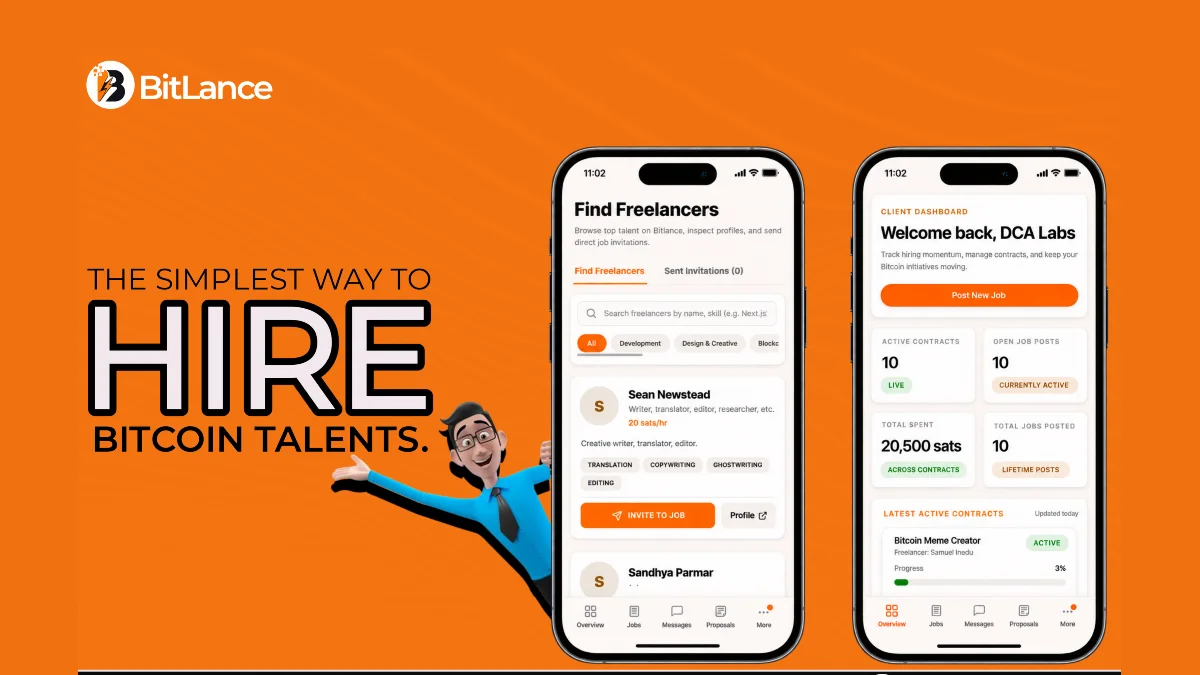
BitLance connects freelancers with Bitcoin-native startups and streamlines the process of invoicing and receiving Bitcoin payments directly, without relying on general-purpose freelance platforms.
Frequently Asked Questions
Do I need a special wallet to get paid in Bitcoin?
Yes, a Bitcoin-compatible wallet is required. Freelancers can choose between custodial and self-custody wallets depending on their comfort with managing security.
Is it better to be paid on-chain or via Lightning?
It depends on the payment size and frequency. On-chain suits larger, one-time payments; Lightning suits smaller or recurring payments due to lower fees and faster settlement.
Is Bitcoin income taxable?
In most jurisdictions, yes. Freelancers should keep accurate records and consult a local tax professional for guidance specific to their country.

Written by
Bitlance Core Team
Research and insights on Lightning Network payments, remote Bitcoin work, and freelancing.
Related Articles

Freelancing in Sats vs. Dollars: A Cost-Benefit Analysis
Breaking down the long-term impact of fee structures, inflation hedges, and instant settlements on your net earnings....

Complete Guide to Using BitLance
Master bidding strategies, secure messaging, escrow mechanics, and wallet setups for direct payments....

50 Freelance Skills to Learn in 2026: A Beginner's Guide
50 freelance skills to learn in 2026, from writing and design to AI automation, with what clients pay for, the tools to use and how to find your first client....